Blog
Why Your Business Needs a Managed Service Provider for Meraki


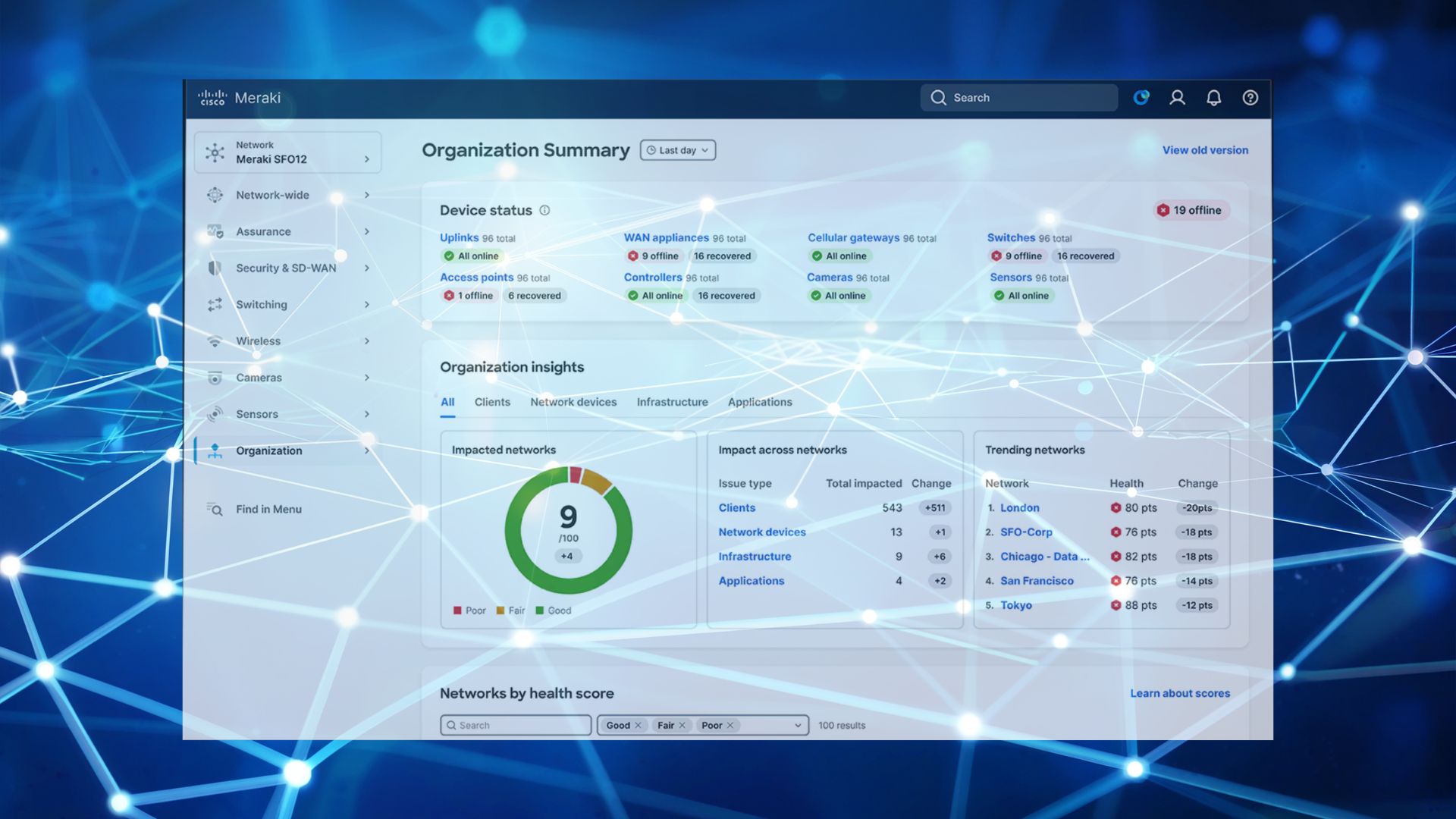
Cisco Meraki is often sold on a compelling promise: networking so simple that anyone can manage it. And to be fair, that’s largely true. It offers fast deployment, the dashboard is intuitive, and getting online is rarely a problem.
But here’s the uncomfortable question most businesses don’t ask: who in your organisation is actually logging into the Meraki dashboard every week to manage it?
For many businesses, the answer is no one.
The network works, so it gets ignored, until it doesn’t. By then, the features you paid for have been sitting idle for months, and small issues have quietly turned into real risks.
The Meraki paradox
Meraki’s biggest strength is also its most common failure point.
Yes, it’s easy to deploy. Access points come online quickly, firewalls are pre-configured, and everything appears neatly in a single dashboard. For a busy operations director or business owner, that simplicity is a relief.
But “easy to deploy” is not the same as “easy to run well.”
Across the UK, the pattern is remarkably consistent. A new Meraki setup goes in, often as part of an office move, fit-out, or upgrade project. The dashboard gets attention in the first few weeks. Maybe a few tweaks are made. Then, as other priorities take over, logins become less frequent and eventually stop altogether.
Meanwhile, the platform keeps collecting data and offering insights that no one acts on. Traffic shaping rules that could prioritise critical applications remain untouched. Security alerts go unreviewed. Licence expiry dates creep closer without anyone noticing.
The system isn’t failing, it’s just underused. And that’s the paradox: businesses invest in a premium networking platform but operate it at a basic level.
What a managed service provider actually does
This is where working with a Meraki MSP changes the picture, not by adding complexity, but by making sure the system is actually used as intended.
A good managed service provider for Meraki doesn’t just keep things running. They actively manage, tune, and evolve your network based on how your business operates.
Day to day, that means proactive monitoring to spot failing hardware, unusual traffic patterns, or connectivity drops before your team notices. Instead of reacting to problems, you’re preventing them.
Firmware management is another key area. Meraki regularly releases updates, often including important security patches. Left unmanaged, these are easy to delay or overlook. G5 Technologies keeps your system current without disrupting your business.
Then there’s licence lifecycle management. This is an often-overlooked pain point. Meraki licences don’t auto-renew, and expiries can cause sudden loss of functionality. G5 Technologies tracks this for you, removing the risk of last-minute scrambles or unexpected downtime.
Beyond maintenance, the real value comes from optimisation. G5 Technologies uses live data from your dashboard to fine-tune capacity and coverage. They are adjusting access point placement, channel usage, and load balancing to match how your team actually works.
Security is another major layer. From enforcing content filtering policies to isolating guest networks and securing admin access with MFA, G5 Technologies, a Meraki MSP ensures your network isn’t just functional, but resilient.
And importantly, this isn’t just technical housekeeping. The best providers, like CloudSE, backed by G5 Technologies in Scotland, tie all of this into regular reviews that focus on business outcomes. Not vanity metrics, but questions like: is your network supporting growth, hybrid working, and new applications effectively?
When self-management still makes sense
Not every business needs to outsource Meraki management, and a good provider will tell you that honestly.
If you’re running a single site with fewer than 10-15 devices, and you have someone in-house who is genuinely confident and has the time to stay on top of it, self-management can work well. Meraki is designed to be accessible, and for simple environments, accessibility is enough.
But beyond that scale, the equation changes.
As soon as your network supports multiple teams, critical applications, or customer-facing services, the cost of distraction starts to outweigh the savings. Managing Meraki becomes one more responsibility competing for attention and in most businesses, it loses out to more immediate pressures.
That’s when gaps appear. Not because the system is difficult, but because it isn’t being prioritised. And in most cases, those gaps stay invisible until something breaks.
What to look for in a Meraki MSP
Not all managed service providers are equal. When you’re evaluating options, look for Cisco-certified engineers rather than generalists who also handle networks. Look for UK-based support hours that match your actual business day, transparent SLAs, and a single named account contact.
Track record matters too. High client churn is a warning sign. G5 Technologies, for example, has clients who have been with us since 2004. And look for a provider who’s willing to right-size your licences rather than simply upsell you hardware you don’t need.
How G5 Technologies approaches managed Meraki
G5 Technologies is an Aberdeen-based MSP with more than 20 years of experience managing business networks across Scotland and the UK. CloudSE is our Meraki-focused service, built for SMBs that want enterprise-grade network management without the enterprise-grade in-house team.
We tie monitoring, firmware, licensing, security, and optimisation into a single managed offering with quarterly reviews that keep your network aligned to where your business is going, not just where it’s been.
Frequently asked questions
Do I need an MSP for Meraki?
Not always. But if your network spans more than one site, supports more than 15 devices, or has no dedicated IT staff, the operational cost of self-management usually outweighs the savings and the risks of getting it wrong are significant.
How much does managed Meraki support cost in the UK?
Costs vary by estate size and service level. G5 Technologies offers a free 20-minute Meraki health check so you get a clear picture before committing to anything.
Can an MSP take over an existing Meraki dashboard?
Yes. If your licences are current and your hardware is supported, transitioning management to an MSP is straightforward. We do it regularly.