Blog
Post-Acquisition Network Integration Mistakes We See After Takeovers: How Integrating Acquired Company Networks Goes Wrong (and How to Avoid It)


Post-acquisition network integration is where networks break, budgets bleed, and teams fight. If you’ve been through a merger or acquisition, you know the drill: excited leadership, aggressive timelines, and IT somehow expected to stitch two completely different networks together while keeping everything running.
We’ve seen this go wrong more times than we’d like. And we’ve seen it go right. Here’s what separates the two.
Mistake 1: Keeping Both Legacy Systems Running
This is the most common mistake we see, and it always feels temporary.
The acquisition closes on a Friday. By Monday, you’ve got two separate networks. The acquiring company wants to “take time to understand” the new infrastructure. The acquired company’s team wants to “minimise disruption.” So you make a deal: keep both networks running for now. We’ll integrate in 90 days.
Eighteen months later, you’re still running two networks.
What started as a temporary bridge becomes permanent infrastructure. You’re licensing both systems. You’re paying staff to manage both. Your helpdesk is supporting people trained on two different dashboards. When employees move between locations, they’re switching networks instead of seamlessly roaming.
Having dual licensing means that you have unnecessary overheads and potential security gaps because you’re managing two separate security policies. It’s the compliance nightmare when an audit asks “which network was that data on?”
The real problem: You’re treating post-acquisition network integration as something you can defer. You can’t. The longer you run two networks, the more expensive and painful the eventual consolidation becomes.
Mistake 2: Wrong VPN/Site-to-Site Architecture
You inherited a new office. So you plug it into your existing infrastructure.
Maybe it’s a VPN tunnel from the new location back to your main data centre. Maybe it’s a site-to-site connection that worked fine when there were 20 people at that office, but now there are 200. Either way, the architecture that seemed clever at the time is now choking your network.
The bandwidth bottlenecks start small. Video calls get a little laggy. File uploads take longer. Then someone runs a large data transfer and everything else grinds to a halt. Your users start complaining about latency.
The issue: You designed the network for the acquired company’s old reality, not your integrated future.
If you’re pulling all traffic from a remote office through a single VPN tunnel to your headquarters, you’re creating a single point of failure and a bandwidth nightmare. If you’re trying to force two completely different network designs to work together, you’re fighting physics and business logic at the same time.
What actually works: A cloud-managed, mesh-friendly architecture where each location can handle its own traffic intelligently, with smart failover if something breaks. You want local internet breakout at each site (so video calls don’t have to travel to HQ and back). You want redundancy that doesn’t depend on a single data centre.
Mistake 3: No Unified Security Policy
Here’s a scenario we’ve seen play out multiple times:
The acquiring company runs tight security. Multi-factor authentication everywhere. Strict firewall rules. Device compliance enforced. The acquired company? Looser. They’ve been running with older policies, more open access, less oversight.
Post-acquisition, you decide to integrate gradually. “We’ll tighten security on the acquired company’s network, but not right away.” Leadership wants to keep things moving. The acquired company’s team argues they’ll be more productive if you don’t lock things down too fast.
So you leave one side of your network with weaker security while the other side is tight.
This is when bad things happen.
An attacker (or malicious insider) gains access through the looser side of your network. From there, it’s trivial to lateral move into the tighter network. Your main company’s security posture doesn’t matter if someone can bypass it through the acquired company’s looser network. You’ve effectively built a backdoor into your own infrastructure.
We’ve seen this lead to:
- Data exfiltration before anyone noticed the breach
- Ransomware spreading across both networks simultaneously
- Audit findings that put the entire company at regulatory risk
- Compliance violations that cost more to fix than integrating the networks properly would have
The lesson: Security policy must be unified from day one. Not “eventually.” Not “after we integrate.” Day one. If the acquired company’s security posture is weaker, you have two choices: upgrade immediately, or don’t integrate that part of the network yet. There’s no middle ground that actually works.
Mistake 4: Ignoring the Acquired Company’s Network Debt
You did your due diligence. You looked at revenue, customer contracts, intellectual property. But did you really look at the network infrastructure you just inherited?
Most companies don’t. They assume “equipment is equipment.” Then they’re surprised to discover:
- The acquired company is running hardware that’s three generations old
- Licenses expire in 6 months (and renewal is expensive)
- The main switch is past end-of-life and not getting security updates
- There’s technical debt from years of band-aid fixes and corner-cutting
This is the network equivalent of buying a house and discovering the roof leaks, the foundation is cracking, and the electrical system needs to be completely rewired.
The previous owner didn’t replace things because they weren’t big enough to justify the capital expense. Now it’s your problem. And it’s always more expensive to fix after acquisition than it would have been before.
We once saw an acquiring company inherit a network where the primary switch was running on borrowed time. They spent 6 months “getting comfortable” with the infrastructure. Then the switch failed during a peak sales period. Recovery took 3 days. The cost in lost productivity dwarfed what a planned upgrade would have cost.
What to do: Get a network health assessment during due diligence. Budget for infrastructure refresh as part of acquisition cost. Don’t pretend the old equipment is “good enough”, it’s not.
Mistake 5: Poor Planning of the Cutover
The cutover is the moment you flip from two networks to one. It should be a non-event. Usually, it’s a disaster.
We’ve seen migrations planned for a weekend, starting Friday at 5pm. By Monday morning at 8am, when everyone logs in, half the office can’t connect. The VPN is flaky. Email’s intermittent. Video calls don’t work. And nobody’s available to fix it because it’s a Monday morning and everyone’s trying to get work done.
Sometimes there’s a rollback plan. Often, there isn’t. So when things go sideways, you’re stuck choosing between “broken integration” and “spend the next 36 hours panicking.”
The cutover never goes smoothly because you’re shuffling thousands of devices, user accounts, DNS records, and security policies simultaneously. Something always breaks. The question is whether you prepared for it.
Poor cutover planning also creates a secondary problem: it extends the pain window. If your integration takes 3 days to stabilise instead of 3 hours, you’ve cost the company in productivity, customer support, and burned-out IT staff.
The right approach: Plan the cutover in phases, not all-at-once. Start with a pilot group. Identify the problems while affecting 5% of the company instead of 100%. Fix those problems. Then expand. Yes, this takes longer. But the true cost is lower because you’re not dealing with company-wide outages.
The Right Approach to Post-Acquisition Network Integration
So what does this actually look like when done well?
Start with a 90-day plan. Not “we’ll figure it out as we go.” A real plan. Who moves when. Which systems migrate first. What the security policy will be. Who’s on the integration team and what are they accountable for.
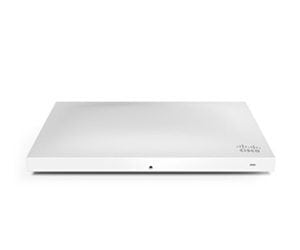
Unify on a cloud-managed platform from day one. This is where Cisco Meraki makes a massive difference. Both the acquiring and acquired company can run Meraki infrastructure, and integration becomes connecting two dashboards instead of ripping out and replacing hardware. You get visibility into both networks immediately. You can enforce a unified security policy without waiting for physical changes to propagate.
Single security policy, single dashboard. Don’t create a “temporary” state where two security regimes coexist. Pick your standard. Upgrade both sides to match. This is non-negotiable! It’s the single biggest factor in whether post-acquisition network integration succeeds or turns into a nightmare.
Plan for the cutover like it’s a critical business event. Because it is. Have a rollback plan. Test it. Have senior IT leadership available the entire weekend. Budget for overtime. Communicate with users about what to expect. Start the cutover on a Thursday, not a Friday.
Do a network health assessment before the acquisition closes. Know what you’re inheriting. Budget for infrastructure refresh. Don’t get surprised by end-of-life equipment or expired licenses six months later.
The Real Cost of Getting This Wrong
We’ve worked with companies that spent more fixing a botched post-acquisition network integration than they spent acquiring the company in the first place.
Not in capital equipment costs. In IT overhead, productivity loss, security incidents, and compliance fines.
The companies that got it right? They planned it like IT was part of the business strategy.
Have you gone through a post-acquisition network integration?
What did you learn the hard way?
Drop a line and we can help you plan your post-acquisition network integration.