Blog
Cisco Meraki vs HPE Aruba, Juniper and Extreme Networks: How the Cloud-Managed Platforms Compare


Choosing a business network isn’t as simple as picking the biggest name on the list.
If you’re looking at a cloud-managed network today, Cisco Meraki, HPE Aruba Networking, Juniper Networks and Extreme Networks are all serious contenders. They all offer centralised management, cloud platforms, AI-assisted troubleshooting and a range of wireless, switching and security products.
So which one should you choose? Well that depends on your business and how it is set up.
The differences aren’t necessarily about one platform being better than the others. They’re about how well each one fits your business, your IT team and the way you need to manage your network.
How the Cloud-Managed Platforms Compare
Feature comparison tables can make all four platforms look remarkably similar. They all promise easier management, better visibility and smarter troubleshooting.
But once you look beyond the feature list, the differences become much clearer.
Here’s where each platform stands out.
Cisco Meraki
Cisco Meraki’s biggest strength is simplicity.
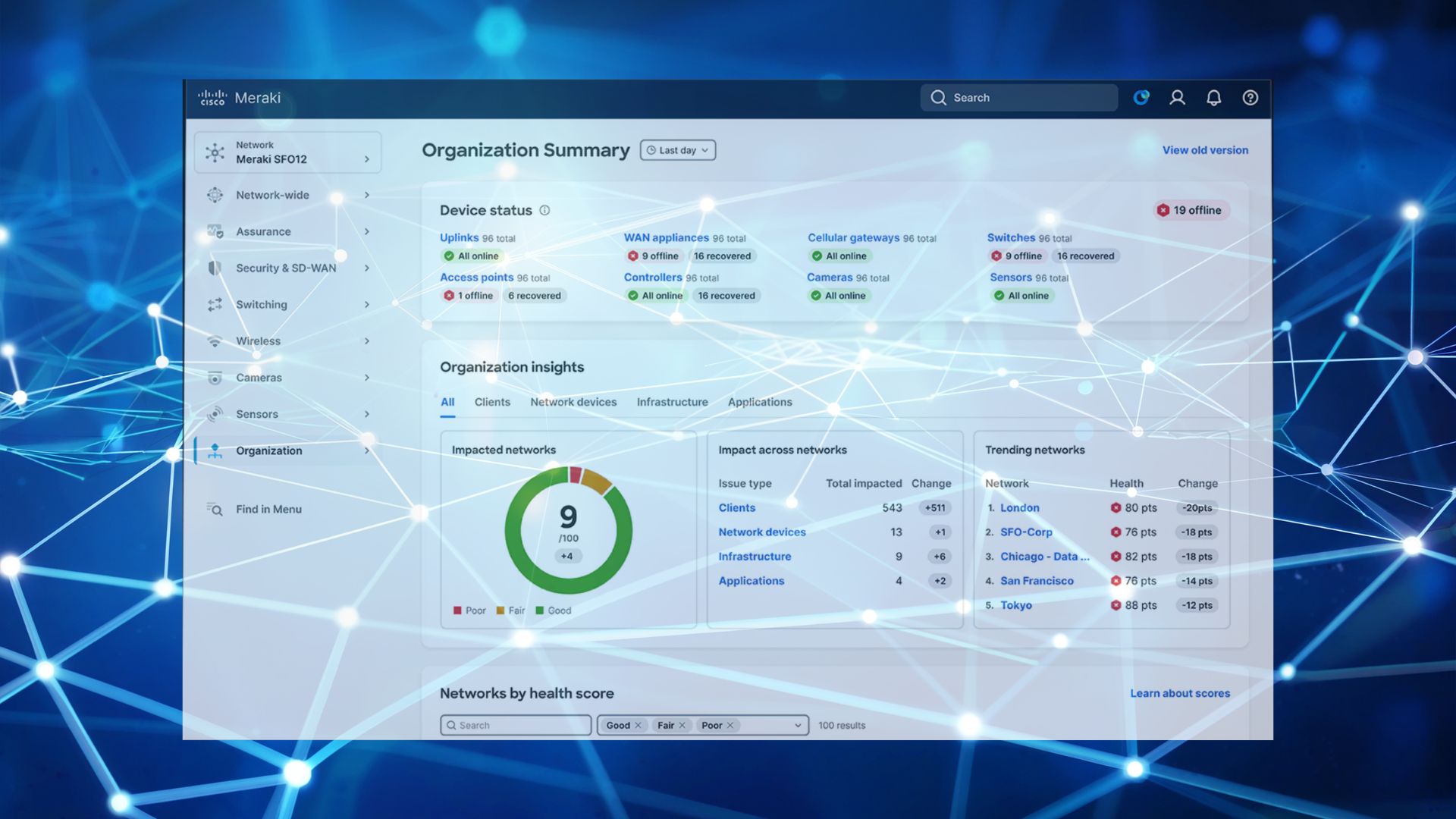
Wireless, switches, security appliances, cameras, sensors and other devices can all be managed from the Meraki Dashboard. That means your IT team doesn’t need to jump between different management platforms just to understand what’s happening.
Where it shines: businesses with multiple sites and a small IT team.
Devices can be claimed into your organisation, receive their configuration from the cloud and be managed remotely. Templates allow you to standardise configurations across multiple locations, which can save a huge amount of time when you’re rolling out the same network setup across branches.
The learning curve is also relatively shallow. That’s important when the person managing the network is also responsible for Microsoft 365, user support, cybersecurity and everything else IT-related.
If you’re new to Meraki, our guide on how to set up Cisco Meraki is a useful starting point.
Worth knowing: Meraki licensing is an ongoing requirement. If licences expire, access to cloud management and other functionality is affected, so renewals need to be properly managed.
Meraki also deliberately keeps things simple. That’s one of its biggest advantages, but if you have a highly skilled networking team that wants granular control over every routing and protocol option, those guardrails can sometimes feel restrictive.
Best for: organisations that value simplicity, consistency across sites and one manageable technology stack over maximum configurability.
HPE Aruba Networking
HPE Aruba Networking takes a slightly different approach.
Aruba has a strong heritage in enterprise wired and wireless networking, with Aruba Central providing its cloud management platform.
One of its major strengths is access control and network policy. Aruba’s Dynamic Segmentation allows organisations to apply policies consistently to users and devices across wired and wireless connections.
Where it shines: organisations where identity, security and access control are just as important as connectivity.
This can make Aruba particularly attractive to larger campuses, education, healthcare, manufacturing and organisations managing large numbers of different users and devices.
Worth knowing: Aruba gives you more configuration options than Meraki.
That’s great if you have an experienced network team with the time and skills to use them. If you don’t, the additional flexibility can also mean additional complexity.
There are also different licensing options and tiers to understand, so it’s important to compare the complete solution rather than simply looking at the hardware price.
Best for: larger organisations with dedicated network expertise and more complex access control and policy requirements.
Juniper Networks
Juniper’s cloud-managed platform is Mist, and its biggest selling point is AI.
Juniper’s Marvis virtual network assistant has been designed to help IT teams understand what’s happening on the network rather than simply giving them another dashboard full of graphs.
For example, rather than simply telling you that a user’s Wi-Fi connection was poor, the platform can help identify the likely cause.
That focus on user experience is one of the reasons Mist has attracted attention in environments such as higher education, retail and large venues.
There is also an important piece of context for anyone comparing Juniper and Aruba: HPE completed its acquisition of Juniper in 2025.
That means buyers are now comparing two networking portfolios that sit under the same parent company. Both Aruba Central and Mist continue to be important platforms, but it’s worth asking your supplier how the products fit into the longer-term roadmap for your particular requirements.
Where it shines: user experience assurance and AI-assisted network troubleshooting.
Worth knowing: the value of the AI capabilities comes with the associated subscriptions. Make sure you’re comparing the total subscription cost rather than just the basic platform licence.
Best for: organisations where wireless performance and user experience are business-critical and the IT team has the skills and appetite to make full use of the analytics.
Extreme Networks
Extreme Networks has built ExtremeCloud IQ into a strong cloud-managed networking platform and has also invested heavily in AI-driven network operations.
One of Extreme’s attractions is its flexibility.
It can support different deployment models, including public cloud, private cloud and on-premises management. That can be useful for organisations with particular data residency, compliance or infrastructure requirements.
Where it shines: flexibility and value.
Extreme can be particularly interesting if you want cloud-style network management but have specific requirements around where your management infrastructure and data are hosted.
Worth knowing: the UK partner and support ecosystem is smaller than Cisco’s, so choosing the right supplier can be particularly important.
As with all four platforms, look beyond the initial hardware cost. Licensing, support, implementation and ongoing management can make a significant difference to the total cost of ownership.
Best for: organisations looking for a flexible cloud-managed platform, particularly where budget or data requirements are important.
Questions To Ask Before You Decide
It’s very easy to get caught up comparing features, specifications and colourful product brochures, but ask these questions before you decide.
Who is going to manage it?
This is probably the biggest question of all.
A technically powerful platform is no use if nobody in your business has the time or expertise to manage it properly.
If your IT person is already responsible for everything from Microsoft 365 to supporting users, a platform that is simple to manage may be more valuable than one with hundreds of additional configuration options.
How many sites do you have?
If you have multiple offices with similar network requirements, centralised cloud management and configuration templates can save significant time.
This is one area where Meraki’s approach can be particularly attractive.
What will it cost over five years?
Don’t compare one switch against another.
Compare the complete cost of ownership:
- Hardware
- Licensing
- Support
- Security subscriptions
- Implementation
- Ongoing management
- Replacement costs
A cheaper box isn’t necessarily a cheaper network.
What happens when the licence expires?
This is particularly important with cloud-managed platforms.
Understand exactly what happens if a licence expires and, more importantly, who is responsible for making sure it doesn’t happen.
If you’re running Meraki, a licence renewal is a good opportunity to review your wider network rather than simply renewing for another year.
Who is going to implement it?
This is often overlooked.
All four platforms are capable.
Some of the biggest network problems aren’t caused by choosing the wrong manufacturer. They’re caused by poor design, configuration or implementation.
The platform matters. The person deploying it matters more.
Our Recommendation
We work with Cisco Meraki because, for the mid-sized UK businesses we look after, the combination of one dashboard, straightforward management and a broad technology stack is hard to beat.
When the person responsible for IT isn’t a full-time network engineer, that simplicity is worth a great deal.
That doesn’t mean Meraki is right for everyone.
If you’re running a large campus with a dedicated networking team and complex policy requirements, Aruba deserves a proper look. If wireless experience assurance is your number-one priority, Mist should be considered. And if your deployment or data requirements are unusual, Extreme may be the better option.
A supplier who tells you their platform is right for absolutely everybody isn’t giving you the full picture.
Want to find out if Meraki is the right fit for your business?